Redgate Data Compare
I’m still not Brent. My name’s Alex, and I care about databases, DevOps and data protection.
- Redgate Data Compare
- Redgate Data Compare Where Clause
- Redgate Sql Data Compare Pro
- Red Gate Sql Data Compare
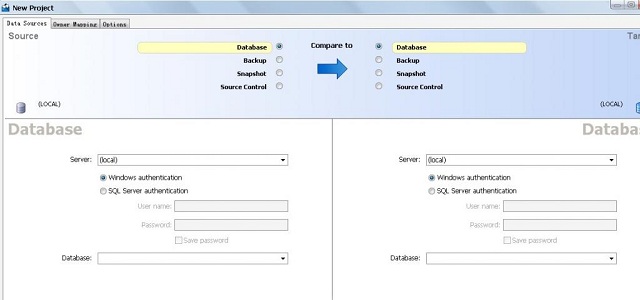
I don’t know if you have ever used the Redgate Sql Data Compare Tool. It is a great tool that allows you to compare data in tables when you have a matching key to go on. I use it quite a bit to.
DbForge Data Compare Express for Oracle is a reliable easy-to-use tool to compare and synchronize data of Oracle schemas. You can quickly analyze data differences in a well-designed user interface and synchronize the data in a convenient wizard with. Redgate’s Data Platform Studio (DPS) provides a simple and reliable way to migrate on-premises SQL Server databases to Azure SQL Data Warehouse. DPS automates the data upload and applies the most appropriate compatibility fixes and optimizations. SQL Data Compare automatically maps tables and views with the same name and schema (owner). However, if there are schema differences between the data.
Last year, and back in May. Now, dear reader, I’m going to review and compare the two most popular tools to help you put it all together: Microsoft.
I hope this post will help you to decide which is more likely to suit you and your team. But first Why SSDT or SQL Source Control and not something else? Good question. Firstly, there are two styles of database source control and deployment: Model (aka “state”) and Migrations. But the tl;dr is that neither are perfect, both hold value, and generally you do need to pick one or the other. To avoid getting tangled up in higher level debates about whether to adopt a migrations-based or a model-based source control solution – or even a hybrid, this blog post is specifically scoped to model-based source control solutions. So what about alternative model-based solutions?
I believe it’s important to use widely used and supported tools wherever possible. SSDT and SQL Source Control are the two most widely used tools in Europe and North America for model-based source control and deployment of SQL Server databases. Other model-based tools certainly exist (see, and for example) but none are anywhere near as widely used or trusted for SQL Server databases as either SSDT or Redgate SQL Source Control.
So let’s get stuck in. Ease of use Implementing database source control or continuous integration is a big change for your team and it will be hard on your developers and you will move more slowly to begin with. Choosing a tool that is easy to adopt will make your life much easier and lead to a far greater chance of success.
Redgate Data Compare
Redgate SQL Source Control plugs right into SQL Server Management Studio (SSMS), whereas SSDT lives in Visual Studio (VS). This is enormous. If your developers and DBAs prefer to work in SSMS, SQL Source Control may feel very natural to them, but Visual Studio is full of new concepts: Solutions files? Project files? The list goes on. This makes the learning curve much more difficult for people who are used to working in SSMS.
Redgate Data Compare Where Clause
It’s not entirely one-sided however. The SSDT table designer is amazing, combining the SSMS table designer and a query window and allowing you to use whichever you prefer. SSDT Table Designer On balance, SQL Source Control is much easier and more natural tool for most database folks. Winner: Redgate Refactoring When deployments scripts are generated by schema comparison tools, which do not look at or understand your data, there are some scenarios which can cause the software problems.
Redgate Sql Data Compare Pro
For example: • Renaming a column or table • Splitting a table • Adding a new NOT NULL column Both SSDT and Redgate SQL Source Control have features to help you in these scenarios, but the SSDT features are better. Redgate’s “” feature is hard to understand and has a tendency to break in nasty ways and cripple your performance. In contrast SSDT gives you both and the. SSDT pre- and post-deploy scripts are a pain to maintain, but ultimately, they work more reliably.
Red Gate Sql Data Compare
In fairness, Redgate have, so they aren’t far behind – but the Redgate scripts do not support SQLCMD variable syntax like the SSDT version does and they do not have anything like the refactor log. Winner: SSDT Filters Perhaps you aren’t interested in versioning objects prefixed with “test_”. Or perhaps you want to filter out some other objects that are supposed to exist in your dev environment, but not production, such as? This is a big win for Redgate – are, frankly, awesome. Whether you want to filter out something small (like ) or whether you want to set up your own naming conventions, these things work a treat. You can even use them to do quite complicated stuff to, but I’d generally discourage going down that road if you can. Redgate SQL Source Control filters In contrast, while SSDT does include some filtering functionality in Visual Studio’s schema compare tool, it’s not as easy to source control your filters and to use them when publishing DACPACs to production environments.