C Write To File Stream
Google play store apk pure. This code creates a file called example.txt and inserts a sentence into it in the same way we are used to do with cout, but using the file stream myfile instead.
Most of the time, a developer needs to read or write data from a location outside the memory of the program. This location can be a text file, a network connection a database or any other source of data.
C Write To File
Are you seriously telling me that there is no way I can write the internall array fast to a file? No optimized routine that writes a memorystream in blocks to a file? In Delphi you have TMemorystream.SaveToFile. This actually writes the memorystream to file, optimized for disk performance. (blocks of 8 k etc.) Kind regards Alexander. How to save image file from stream? C# / C Sharp Forums on Bytes. Unlike some earlier programming languages, C has no direct support for random-access data files; to read from a record in the middle of a file, the programmer must create a stream, seek to the middle of the file, and then read bytes in sequence from the stream.
In order to deal with such sources of information,.NET Framework provides a set of classes that can be used to read, write and interact with such data sources. This is done via streams & IO classes which is the topic under discussion. • • • • How Streams Work? Before dwelling into the details of streams, let us first throw some light on its architecture. The foundation of.NET streams architecture is laid upon three fundamental concepts: • Backing Source • Decorators • Adapters Backing source is the source from where data is read or destination to which data is written. Backing source can be file or network connection. In order to deal with backing source a uniform interface is required.
This is done via a Stream class in.NET framework. Stream class reads or writes data sequentially in the form of bytes or chunks of manageable size in the memory. This is different to the concept of array where all the data has to reside in memory. Thus, streams use less memory as compared to arrays. Streams further divided into two types: • Backing Source Streams: These streams actually interact with data source or destination.
For example, NetworkStream or FileStream. • Decorator Streams: These streams are used to transform data in some other form and then feed that data to other streams. Both types of streams deal with data in terms of byte. They read and write data sequentially in terms of bytes.
C++ Write To File Example
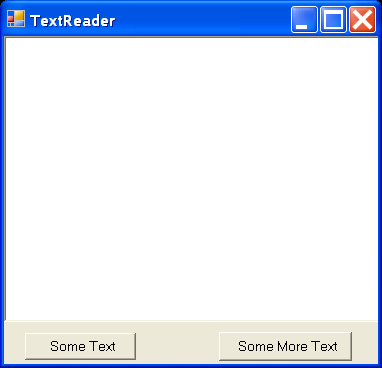
However, in real world programming, a higher level of abstraction is required where developers can use more concrete methods such as ReadLine or WriteAttribute methods which can read a line from a file and write XML attributes to file. This abstraction is provided via Adapters. Freefall tournament free accounts. Simply putting, Adapters wrap streams, hiding complexity of interacting with byte based data interaction. To further understand the concept of streams, have a look at the first example of this article: Example1.
C# Read File To Stream
Summary: in this tutorial, you will learn how to write a text file using C standard I/O functions. C Write Text File Steps The following illustrates the steps of writing text into a text file line by line: • First, open the file for writing using fopen() function with mode ‘w’. It is important to note that in this mode the file content is deleted and the file is overwritten if the file already exists. • Second, use function fprintf() to write text to the file stream. • Third, use function fclose() to close the file. C Write Text File Example The following program writes 10 lines of text into a text file named 1.txt in the c: temp folder.